Preserving a heritage
I am constantly reminding people that we need to preserve our history. When we are younger we go about our daily lives thinking of only today and what we'll be doing tomorrow. As we grow older and lose our grandparents and parents many of us start to realize that our past is very important too.
Many of Manning's early citizens use to speak Plattdeutsch since they and/or their parents immigrated from northern Germany. Today only a few people in the Manning area can still speak this language but it is preserved in other areas of Iowa and the U.S. where large populations of German descendants still reside and have historical societies and museums.
Speaking Plattdeutsch in northern Germany today is losing interest as younger generations seldom use the different dialects their ancestors use to speak. Interesting enough some historians from Germany who want to preserve languages such as Plattdeutsch come to the U.S. and especially Iowa where large populations of Germans immigrated to in the late 1800s and early 1900s. Some words used in the different dialects and traditions that have been lost in Germany were continued by our early German immigrants here in the U.S and passed down the generations.
This past September a film crew from Germany came to Manning to get some footage of the Hausbarn. They were making a documentary about the use of Plattdeutsch in other countries and wanted to add the Manning Hausbarn to the documentary since it came from the area of Germany where Plattdeutsch was spoken. Karl Maas, from Walcott, Iowa, who helped with the reconstruction of the Hausbarn in 1999, came along with the film crew. Karl is a first generation immigrant from Germany and he speaks fluent Plattdeutsch.
Just recently I received a Christmas card from Peter Kusel and his family who lives along the Elbe River in Bäckern, Germany. Peter said they recently saw this documentary about U.S. Plattdeutsch and the Manning Hausbarn on their T.V. So Manning continues to be highlighted overseas - an honor not many communities ever receive.
To show you how history/genealogy can be lost forever. Peter Kusel and I are distant cousins, unfortunately we can not find the exact connections because during WWII church records were destroyed and there are about 20 years of information that got lost which broke the family connections. Also during the communist occupation of East Germany even more records and religious connected things were destroyed. The tombstones that stood over Peter's grandparent's graves were torn down and hauled away and buried by that government. I think this is why people such as Peter and Germans who speak Plattdeutsch cherish their history and ancestry so much. Here in the U.S. we tend to take things for granted a lot more and become indifferent at times.
Learning English
Some students who started country school in the early 1900s only spoke German so
they learned English in school. For some school teachers this created difficulties if they
did not know much German.
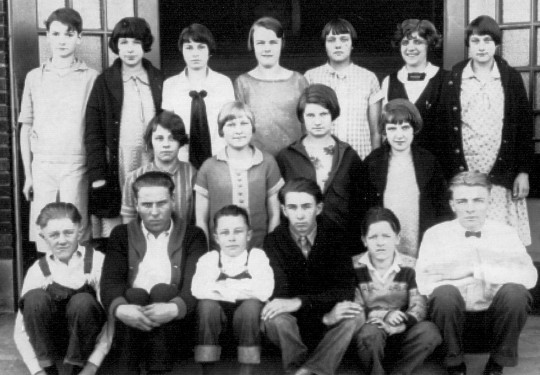
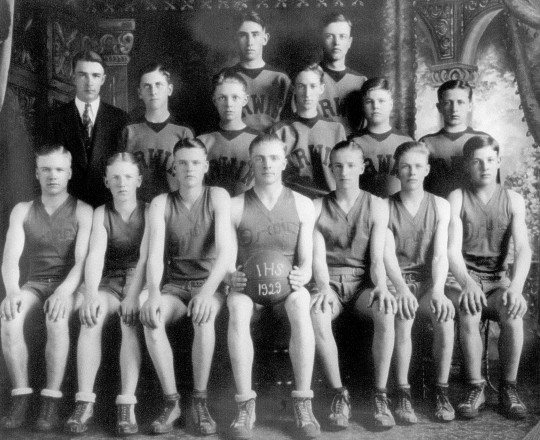
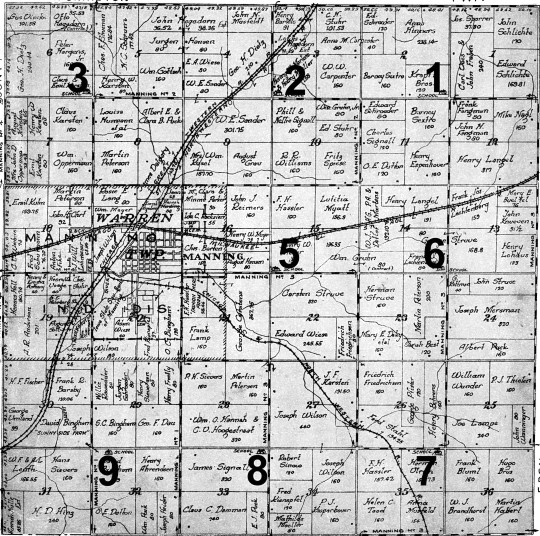
Recently Larry Hodne sent me some country school information about Jefferson No. 8 in Shelby County. His dad Harold, uncle Arlo Hodne, and their cousin Elsie Petersen attended this school. After Harold graduated from country school he rode his horse to the Irwin school where he graduated in 1929. Elsie's teacher is Edna (Gawley) Campbell whose picture was in the December 14 Monitor issue. Larry went to visit Edna and is helping her with her biography for the Manning school history book.
Larry's efforts will really help in achieving our goal to get as many teachers as possible featured in the school history book.
Irwin consolidated school
Ewoldt No. 2
Phillip Musfeldt recently sent me some information about Ewoldt No. 2 country school
in Carroll County ---- Jay, Betsy and I attended country school at Ewoldt No. 2. At one
time in the early 1950s Golda Sander, the teacher, (Golda was married to Ray Sander one
time part owner of the hardware store at the corner of Main and 3rd where Karl's pizza
was) and my mother Ida worked with the author Lois Lenski in writing the book "Corn Farm
Boy." If you can find a copy of the book, you will find a number of Manning area names
used. Dick Hoffman is the main character and the Vet was named Doc Musfeldt as I recall.
Ms Lenski sent a letter of thanks to Golda, mom and the students of the school for all their
help. I do not know what happened to the letter, perhaps Golda's daughter Faith has it. If it
can be found its history may make an interesting addition to the MHS history book. My
brother Jay may have more information about the book and how Ewoldt No. 2 was part of
writing it. It was published in 1954 or 55.
Pictures - clippings
Please read -- pictures that are in newspaper clippings, yearbooks, and other types of
printed material are made up of a large dot pattern type print and do not produce well from
a computer scan. These types of pictures will NOT work in the history book. What we are
looking for are original photos - they will scan the best and if possible I would
prefer to do the scanning. I have scanned thousands of photos and have a fairly high-end
scanner and know how to adjust the settings to get the best possible image for the history
book. Scanning a COPY of a photo loses quality in the final result so please
contact me before sending copies.
But -- clippings that have information about a photo are of interest since I may have the original photo or a scan of it but not the identifications.
Also -- when you bring in your history information to the Monitor please make sure you put your name and phone number on the envelope.