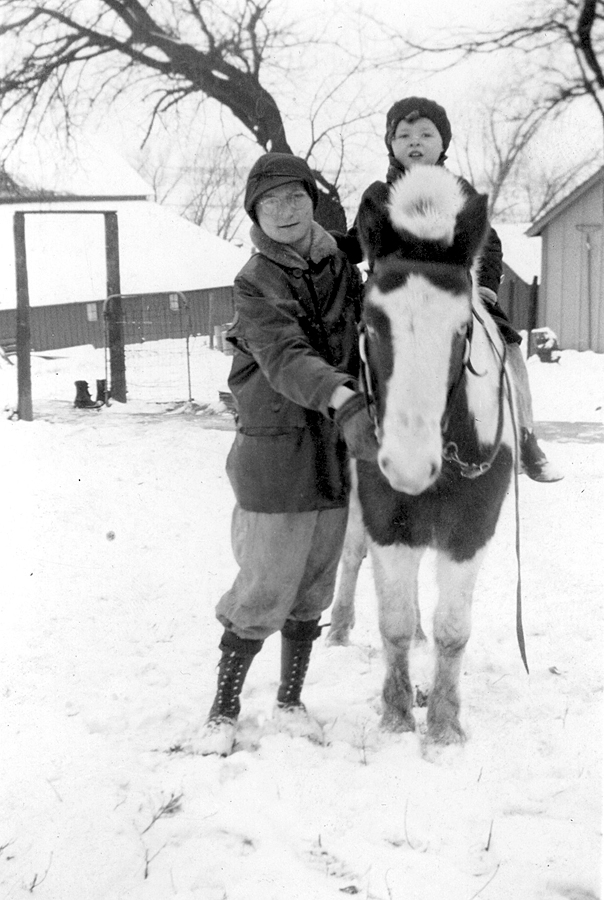
Roy Struve with his cousin, Marilyn (Popp) Nelson, sitting on Spot
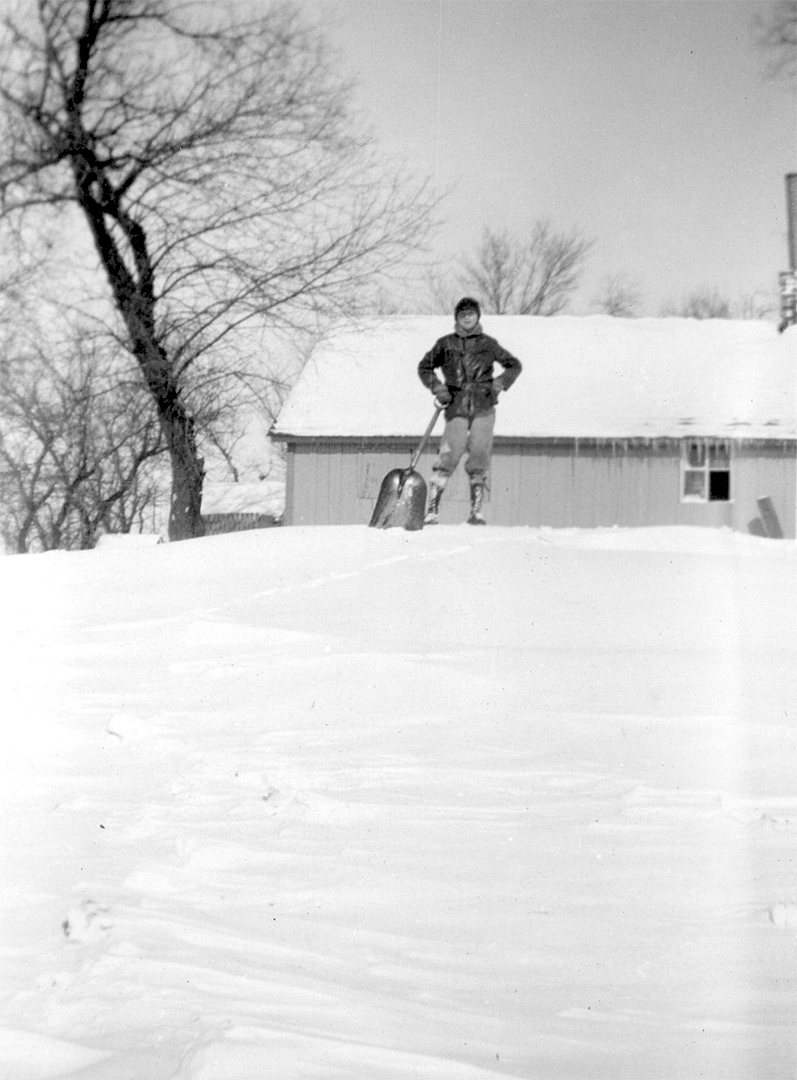
Roy Struve after blizzard in 1936
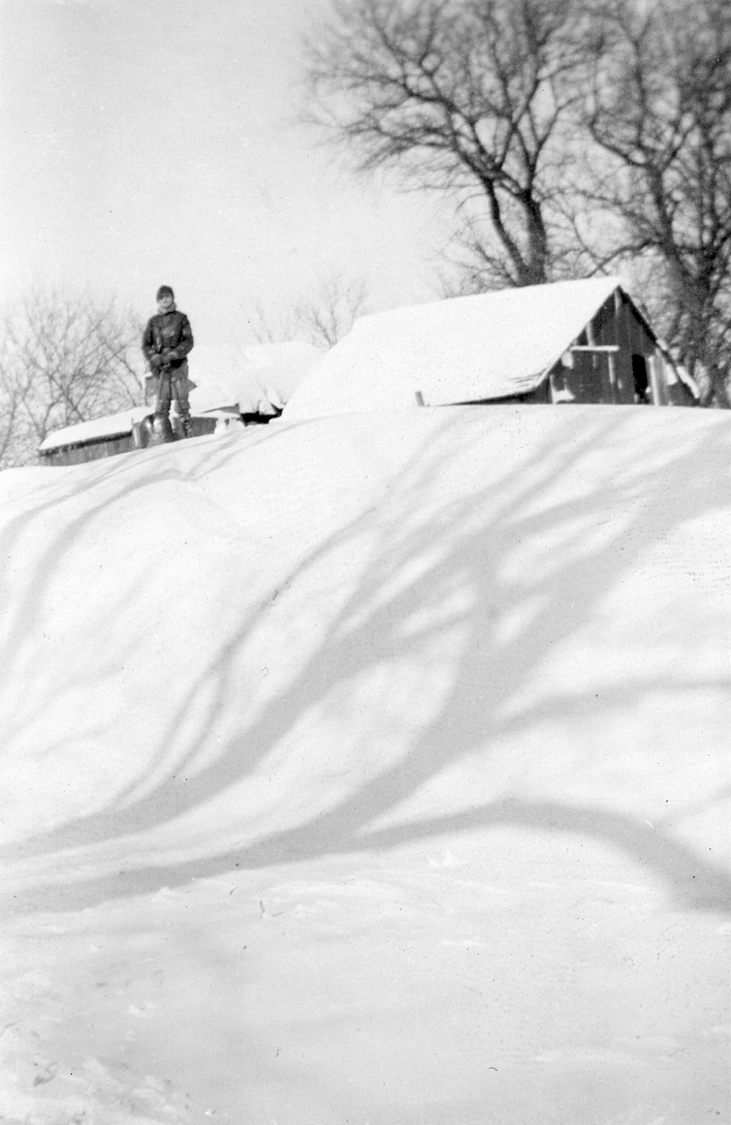
Roy Struve after blizzard in 1936
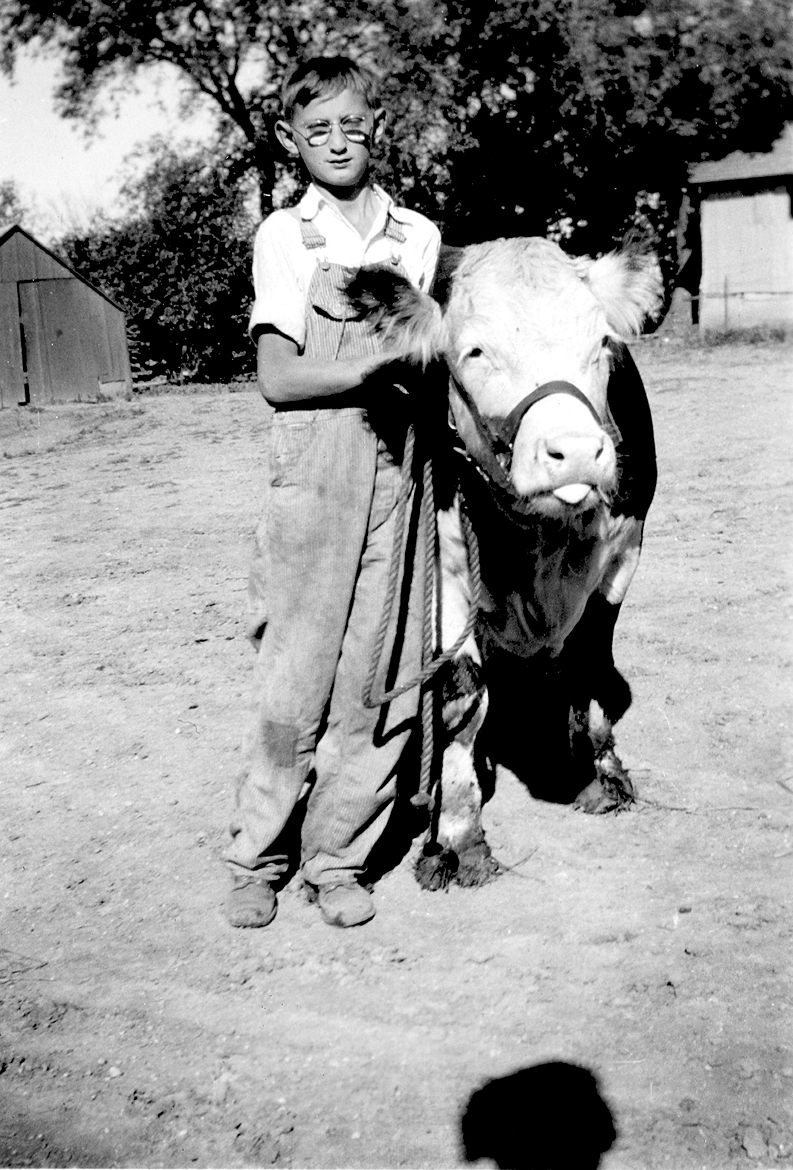
Roy Struve with his 4-H steer circa 1938
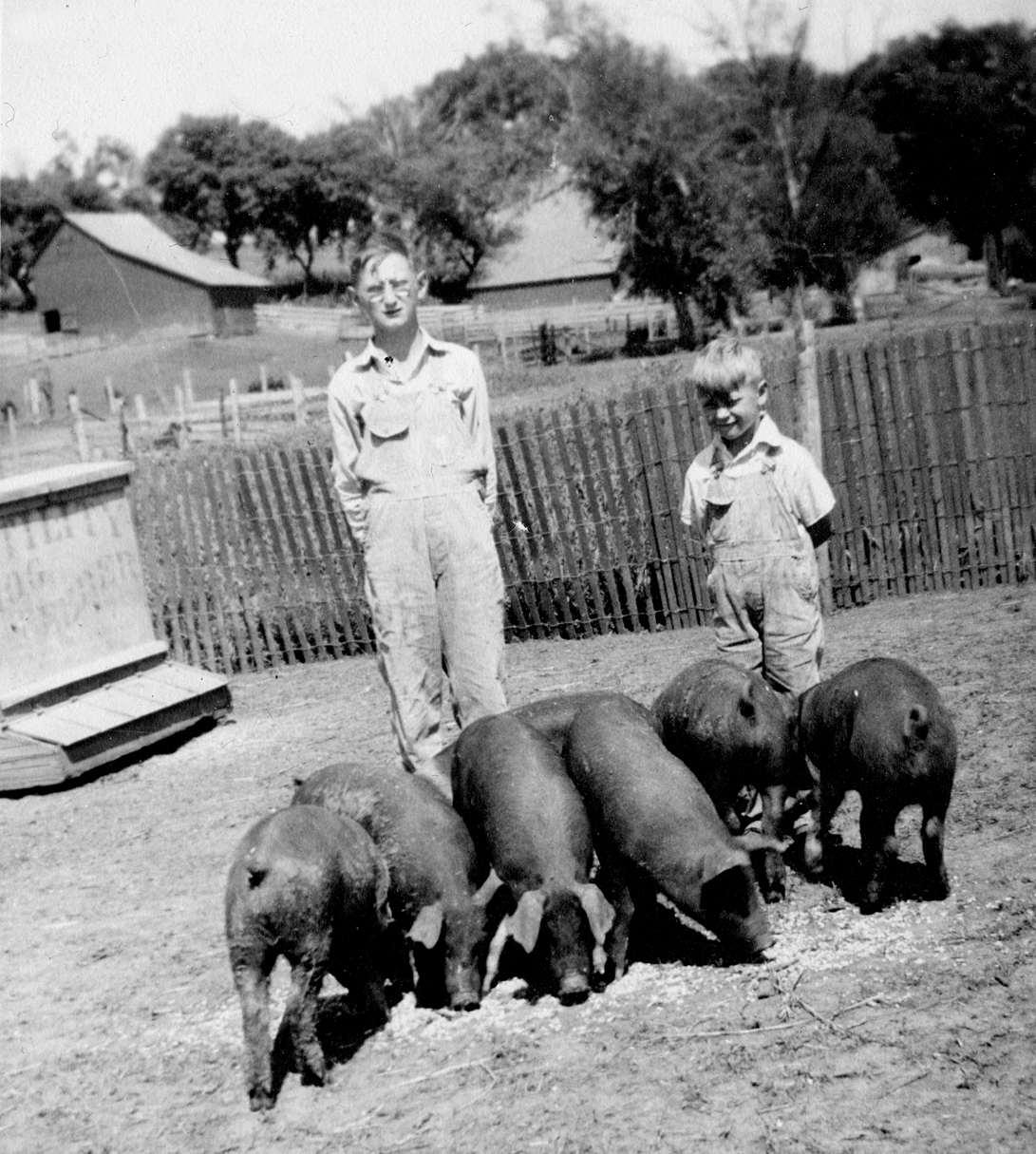
Roy Struve with Merlin Nulle 1938 Roy's first litter of pigs
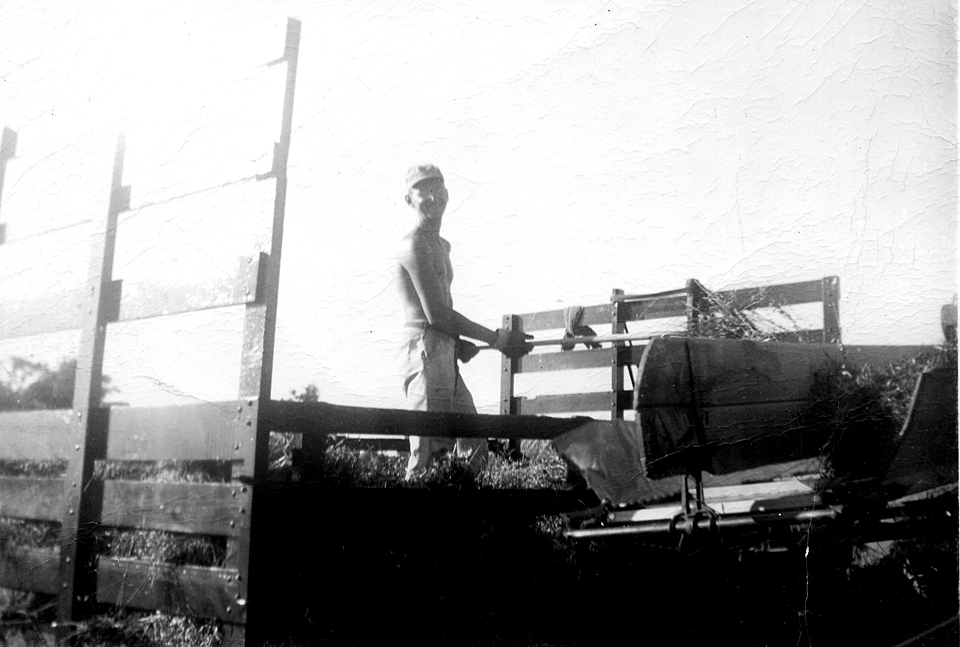
Roy Struve threshing oats 1943
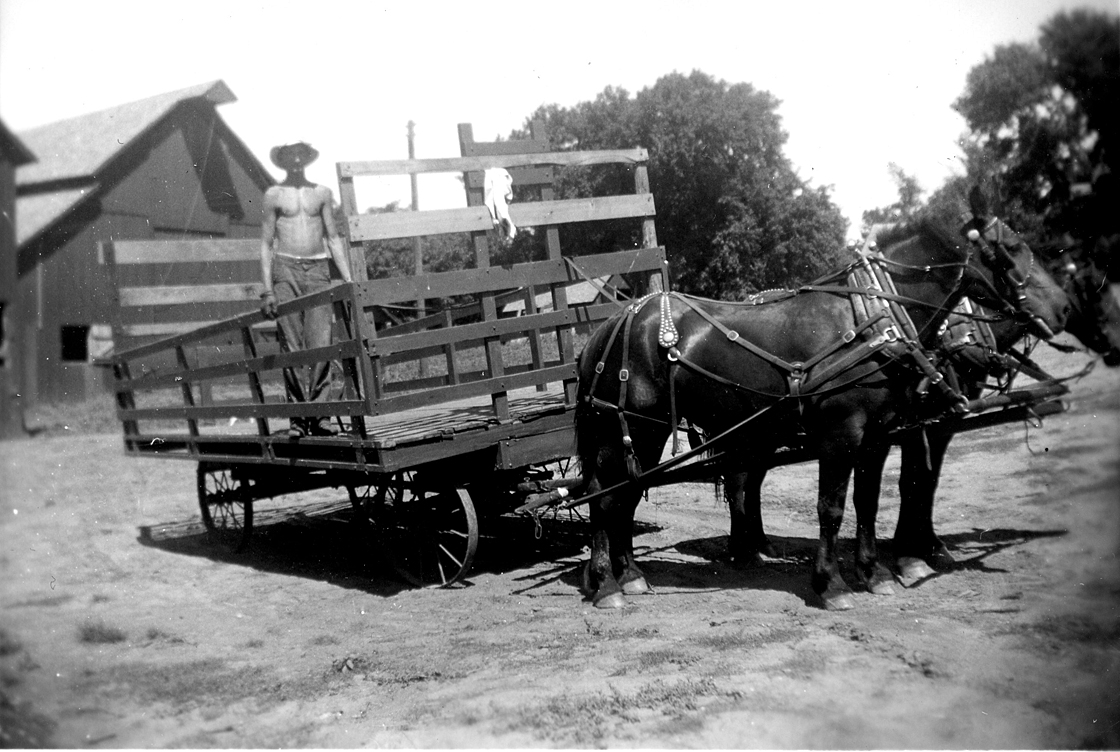
Roy Struve threshing oats - Flora & King pulling the loose hay wagon
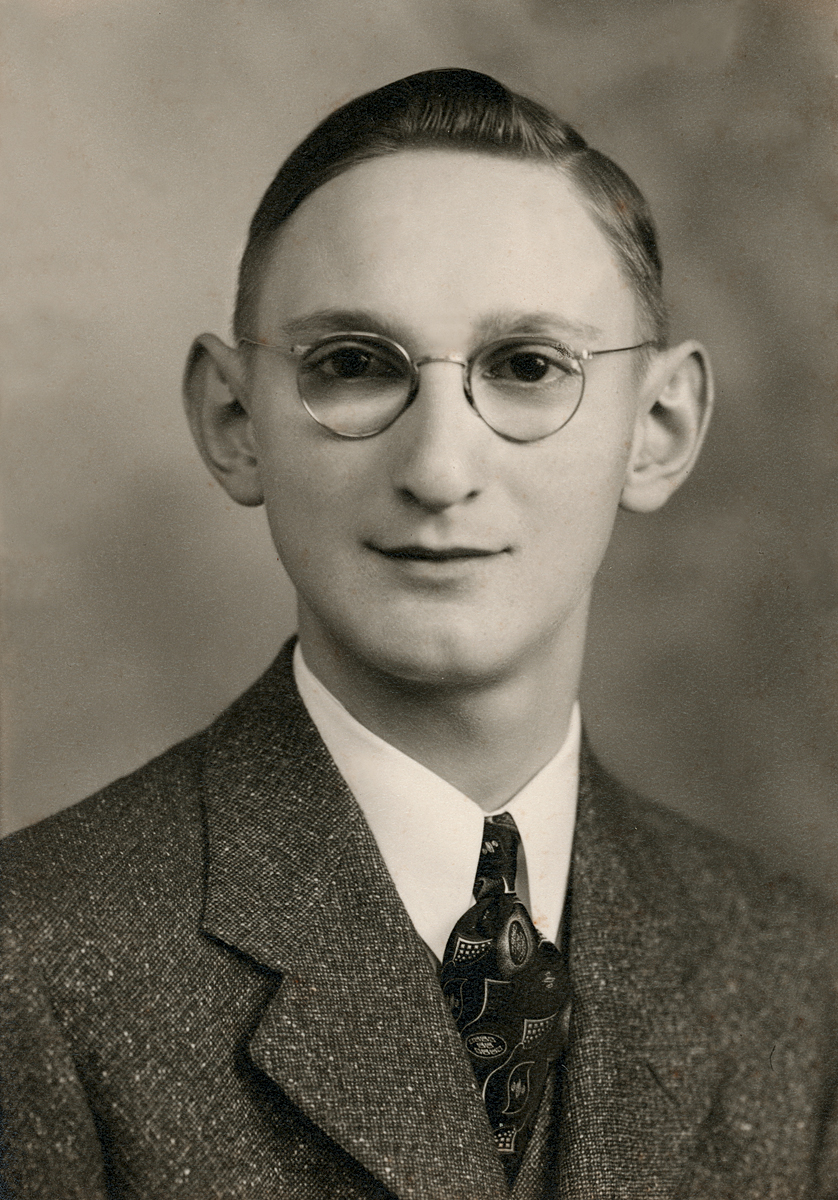
Roy Struve MHS 1941
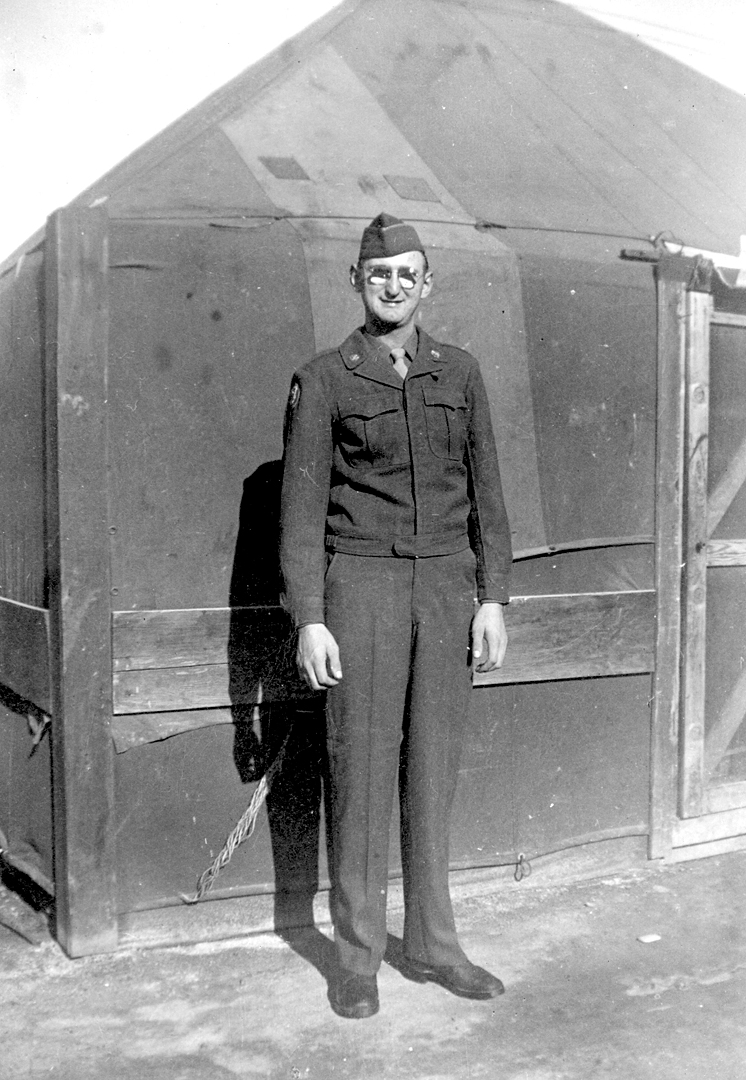
Roy Struve military service
Memories transcribed from the November 11, 2014, interview with Roy Struve
Around 25 military related pictures were scanned, along with a number of
letters that were written back and forth while Roy was serving.
Roy Struve reported to Fort Snelling, Minnesota, after he
received his draft notice, to take his pre-induction physical - which he passed.
From there Roy was sent to Fort Knox, Kentucky, where he
trained to operate a 105mm Howitzer for a three-month basic training period. It
took seven men to operate a Howitzer. Each man had to learn all seven positions
in case someone was injured the other men could fill in. Roy's group was considered "special forces."
Once Roy finished his training he received a ten-day leave so he came home to Manning.
Roy then rode a train out to Camp Stoneman, in Pittsburg, California,
where they received their orders for Korea. They left in the morning, going under
the Golden Gate and Oakland Bay bridges, then they went to bed and by morning
when they woke up all they could see was the Pacific Ocean, in every direction.
When Roy returned home they went under the same bridges in San Francisco.
On the trip over, Roy remembers seeing schools of porpoises diving out of the water along the ship.
Roy was in Korea during the winter.
The Korean Conflict had not yet become a "hot" war
but Roy always had to carry his rifle…which he never had to use. They never had
to go on maneuvers or training missions while in Korea.
Roy managed a PX warehouse that received and distributed supplies for the Army.
On occasion when supplies were checked out and transported
to a location that needed to be resupplied - when the truckers got there some
of the items were missing - for instance a case or two of beer.
The truck drivers were getting into trouble so they
requested that one of the men be allowed to ride in the back of the truck. It
so happens they had to stop at a railroad crossing so this time the drivers
found out what was happening…South Koreans were jumping in the back and handing
out the beer and other supplies while the truck sat at the crossing.
Roy was first stationed at the 38th Parallel, then to Ascom City, and finally to Inchon.
On one occasion, General Dwight Eisenhower visited Roy's
location, so he got to see Eisenhower while in Korea.
Roy's small group was stationed with a "colored"
Battalion. They all worked and performed daily activities together.
As a young farm boy from Iowa, Roy remembers his amazement in
seeing the Koreans gather human waste from the cities and haul it out for use as fertilizer in the farm fields.
The Korean farmers used bench terraces to help prevent erosion.
A very happy memory Roy has is when Lieutenant Kernel Shay
told the soldiers in camp that word came from Washington that all draftees,
both overseas and stateside, were to be released immediately on March 31, 1947.
The ship Roy came home on could not come into the bay
because the water wasn't deep enough so the men were taken out on a landing
craft. From there they had to climb the rope ladder along-side the ship. Roy
had a duffle bag on each shoulder and climbed those ropes. At the top were other soldiers who helped them onto the ship.
They stopped in Hawaii on their way home before heading to Camp
Stoneman, California, where they were discharged.
While Roy was leaving Hawaii he remembers seeing a ship carrying newly commissioned 2nd Lieutenants who were
all on the forward side of the ship and when it hit the breaker waters they
were washed back to the center of the ship. Roy knew, from previous experience
on a ship, about the breakers and that you didn't stand on the front of the
ship until further out at sea and away from the breakers. Roy and the other men
on his ship really had a good laugh seeing the lieutenants learn the hard way about breakers.
After Roy arrived at Camp Stoneman, they were discharged on
June 2, 1947. Roy was first offered a commission when he returned stateside but
he told the official he wanted to go home and farm. Roy was later concerned
that he would be drafted again when the Korean conflict began in June of 1950 but that never happened.
At Camp Stoneman he was provided a ticket to ride by rail to
Omaha, and from there he received another ticket to ride the Great Western to Manning.
Roy got off at the Manning Depot and George Peters picked up
Roy and took him up town. Roy called his parents and his mother answered the
phone so Roy asked her if she had room for one more at dinner - surprising her
because they didn't know Roy had even left Korea - so Roy's dad came to town to take him home.
Roy's wife, Virginia, was living in Long Beach, California,
with her family when the Japanese bombed Pearl Harbor. Long Beach was a naval
base and had a lot of oil wells, so the US officials were worried that the
Japanese would attack the mainland next. Virginia remembers blackouts and air
raid drills, and that her mother became very flustered worrying over all of these events.
Roy and Virginia visited California several years later and
went to a Japanese American internment camp area where they could buy things
being sold by the Japanese Americans. Roy remembers visiting with one of these ladies
and purchased some things from her. He remembers telling her the he was of
German descent but was not subjected to the same mistreatment that Japanese Americans received.
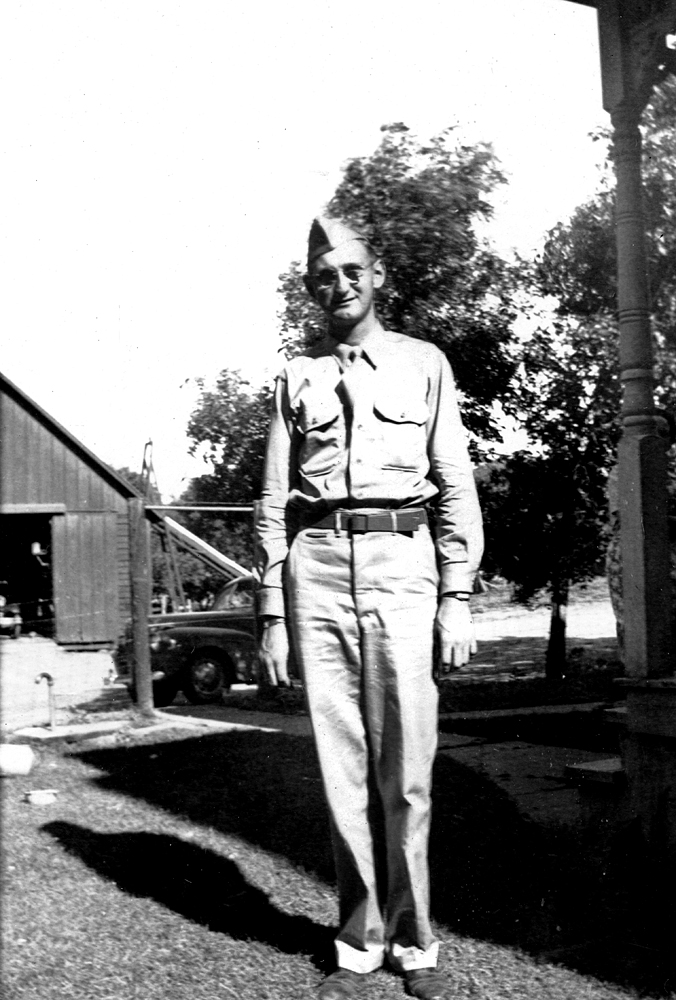
Roy, home on leave
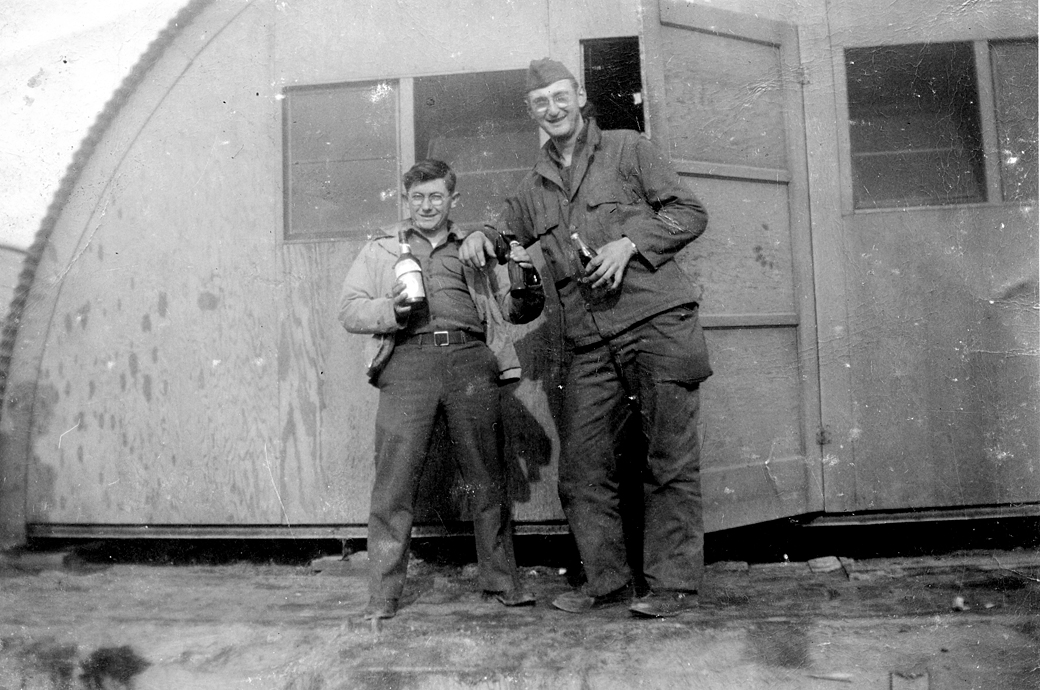
Roy with "Shorty" in front of their barracks
1952 Rural Fire truck
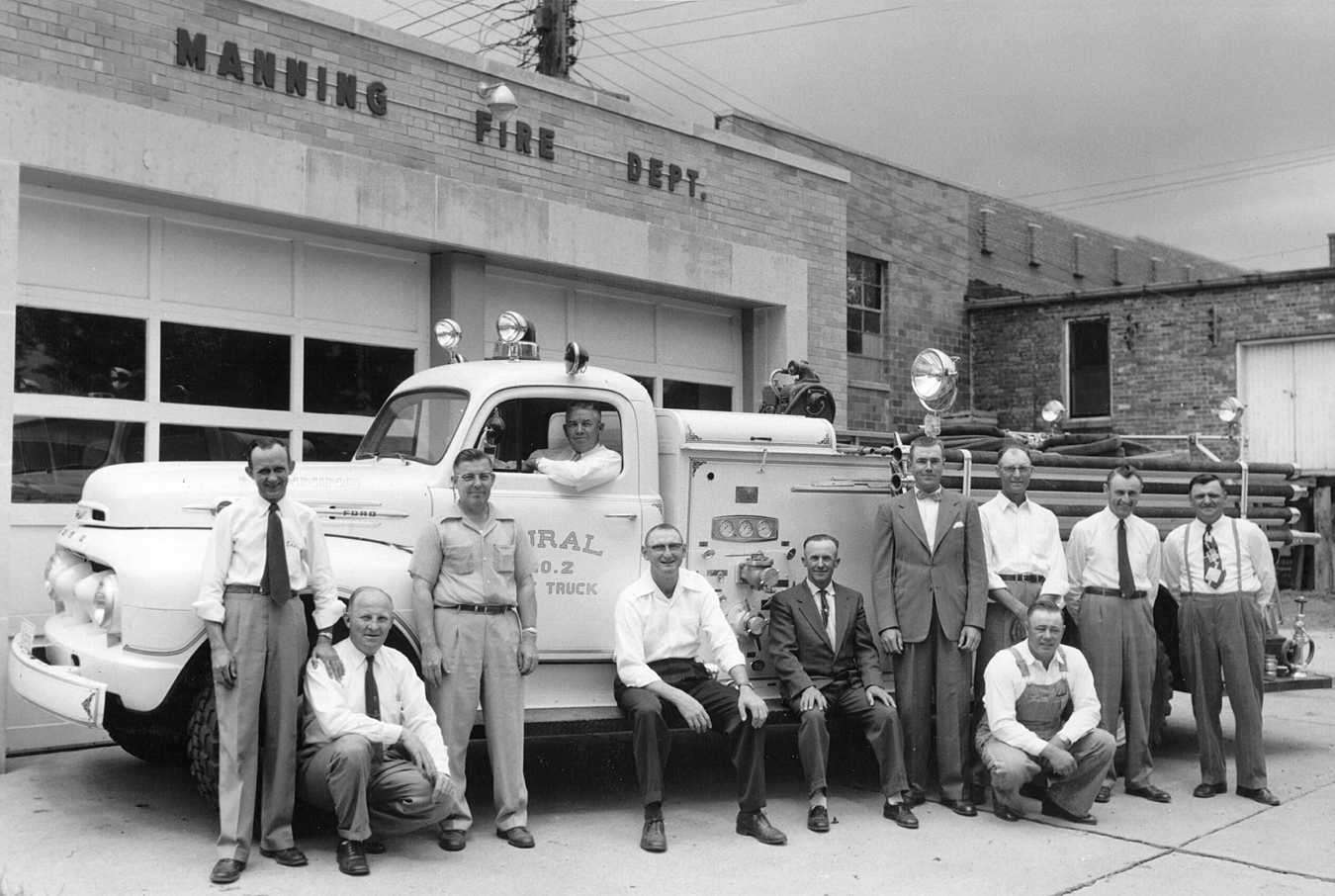
Standing left to right: Eddie Johnson, ??, Chris Schmidt, Roy Struve,
Gary Schroeder's dad ? Julius Schroeder?, ?Alvin ?, Fred Nulle, Ralph Struve, Bill Dammann
Crouching: Ed Knaack, ?Virtus Martens?
Roy Struve and to the right are Rural fire truck committee
Manning Firemen to left of Roy
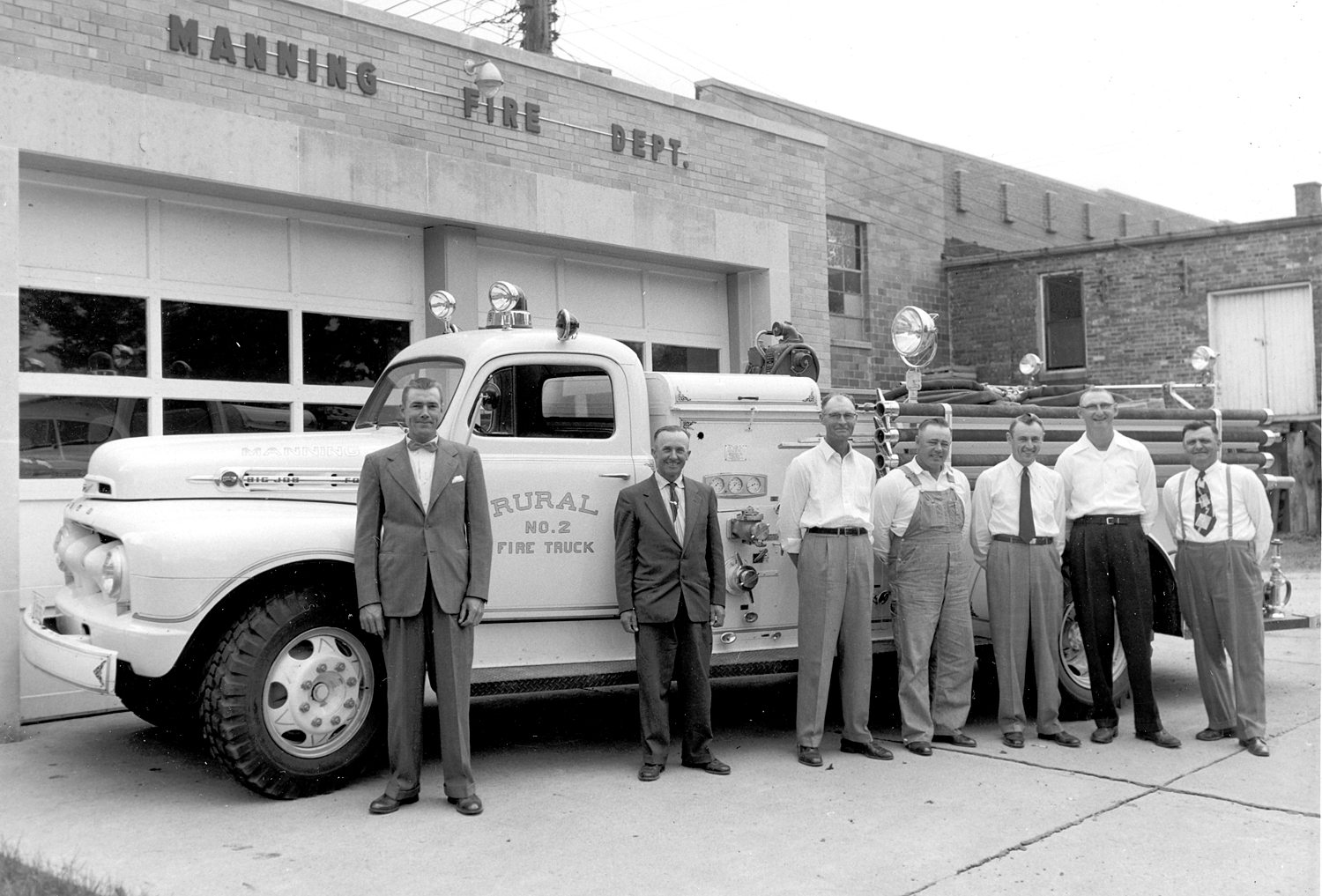
Fire truck committee members: ??, ??, Fred Nulle, ?Virtus Martens?, Ralph Struve, Roy Struve, Bill Dammann