|
|
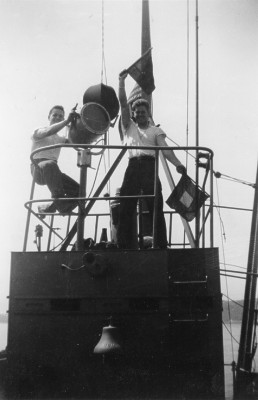
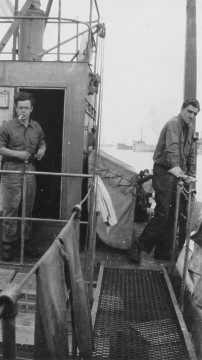
These are the 2 signal men of the 537 LCT. Gene Schoepner was the spotlight signal man. The round bag behind the spotlight is the Flag Bag. This bag contained different flags, each having a special meaning. |
|
Mohr's boat left Southampton just after midnight on June 6, 1944. The sea was so rough that three of the 42 LCTs sank on the way. "' Oh God. Here we go.' That's the way we felt," he said. "It just made you sick. You'd go half crazy. But you've got to kind of hold yourself together." '"There were a lot of suicides then. Some guys just couldn't take it. Our signal man jumped over the side going across the channel. The last we heard of him was when he hit the screws (propellers) underneath. Nothing like that makes you feel very good." |
Other memories of Bud:
The English Channel has 14 foot tides. It is about 23 miles across in many places but
when the tide goes out the Channel can shrink down to less than a mile in places.
Bud remembers this Channel being one of the roughest bodies of water he was on with
waves reaching 30 feet high.
Obviously due to the dark hours and danger of the mission no pictures were taken during the time Bud left Southampton through the initial D-Day Invasion.
|
|
These are the 2 signal men of the 537 LCT. Gene Schoepner was the spotlight signal man. The round bag behind the spotlight is the Flag Bag. This bag contained different flags, each having a special meaning. |
|
|
|
|
|
 |
|
|
Rear of the LCT. Note the railing used as a clothes line. The open door-way is to the crew quarters. This door had a basic latch and also a round handle latch which was used to tightly seal the door during high seas when water would come over the deck. |